PRESS KIT
DEAD RECKONING · THE LONG DRIFT
A generation-ship colony sim about the slow erosion of a thousand people — genetic, ideological, cultural — across a voyage measured in generations.
Demo out now on Steam. Full release: June 25, 2026.
FACTSHEET
| Developer | Garan Lorn · Selenodrome |
|---|---|
| Press contact | [ click to reveal email ] |
| Website | garanlorn.itch.io/dead-reckoning |
| Steam | store.steampowered.com/app/4557340/Dead_Reckoning_The_Long_Drift — App 4557340 — demo available now |
| itch.io | garanlorn.itch.io/dead-reckoning |
| Mastodon | @garanlorn@gamedev.place |
| Bluesky | @garanlorn.bsky.social |
| Discord | discord.gg/p2xrKcQ7nD |
| Release date | June 25, 2026 · demo available now on Steam |
| Platforms | Windows · Linux · macOS · Steam Deck Playable (target) |
| Languages | English · German · French · Italian · Spanish |
| Engine | Godot 4.6 |
| Genre | Generation-ship colony sim · Narrative strategy · Roguelike (per-run) |
| Modes | Single-player |
| Current version | 0.2.86 (demo build) |
DESCRIPTION
SHORT — 25 words
A generation-ship colony sim about a civilization eroding across centuries. Each decision is defensible the year you make it; the bill comes due generations later.
MEDIUM — 60 words
Dead Reckoning is a slow strategy-and-narrative game about managing drift — genetic, ideological, reliance on the ship's AI, class division, and the loss of technical knowledge — across a generational voyage. You guide 1,000 colonists through centuries of decisions, with no combat and no perfect outcome. What reaches the destination, if it arrives at all, may not remember why it left.
LONG
1,000 colonists. One ship. A destination that may be fifty years out, or four hundred. A few will land. Most will be born, age, and die in the dark between stars without ever learning whether the mission succeeded.
Dead Reckoning lives in the slow erosion of a civilization across generations. A ration vote, a research fork, a decision about who gets woken — each is reasonable in its own year, and each compounds. The crisis lands generations later, on people who never knew it was set in motion.
Manage food, power, and hull integrity through centuries of deep space. Five kinds of drift — genetic, ideological, reliance on the ship's AI, class division, and the loss of technical knowledge — accumulate over the whole voyage and never reset. The faction that holds the ship in year 200 was shaped by a council's choice in year 40.
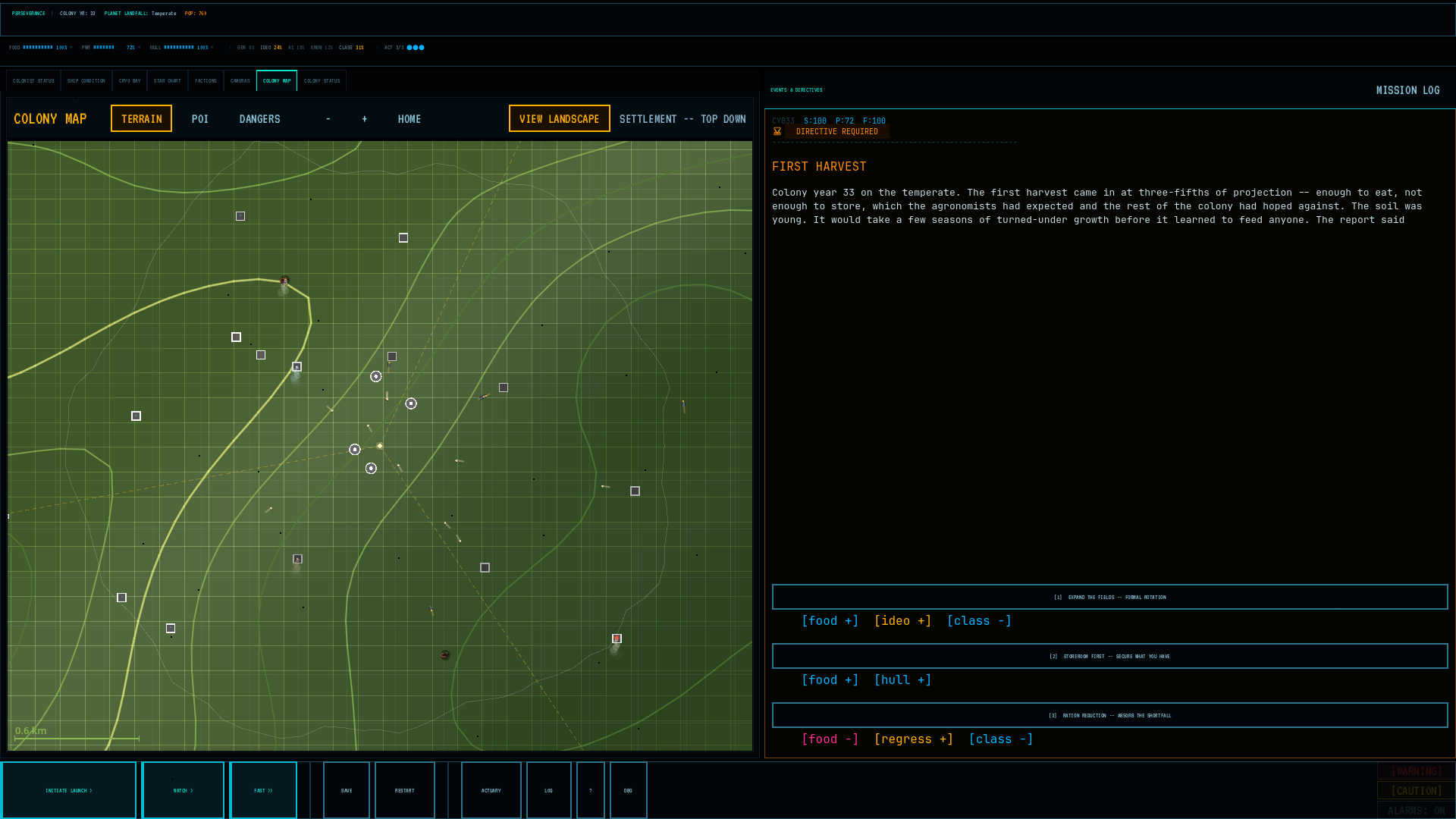
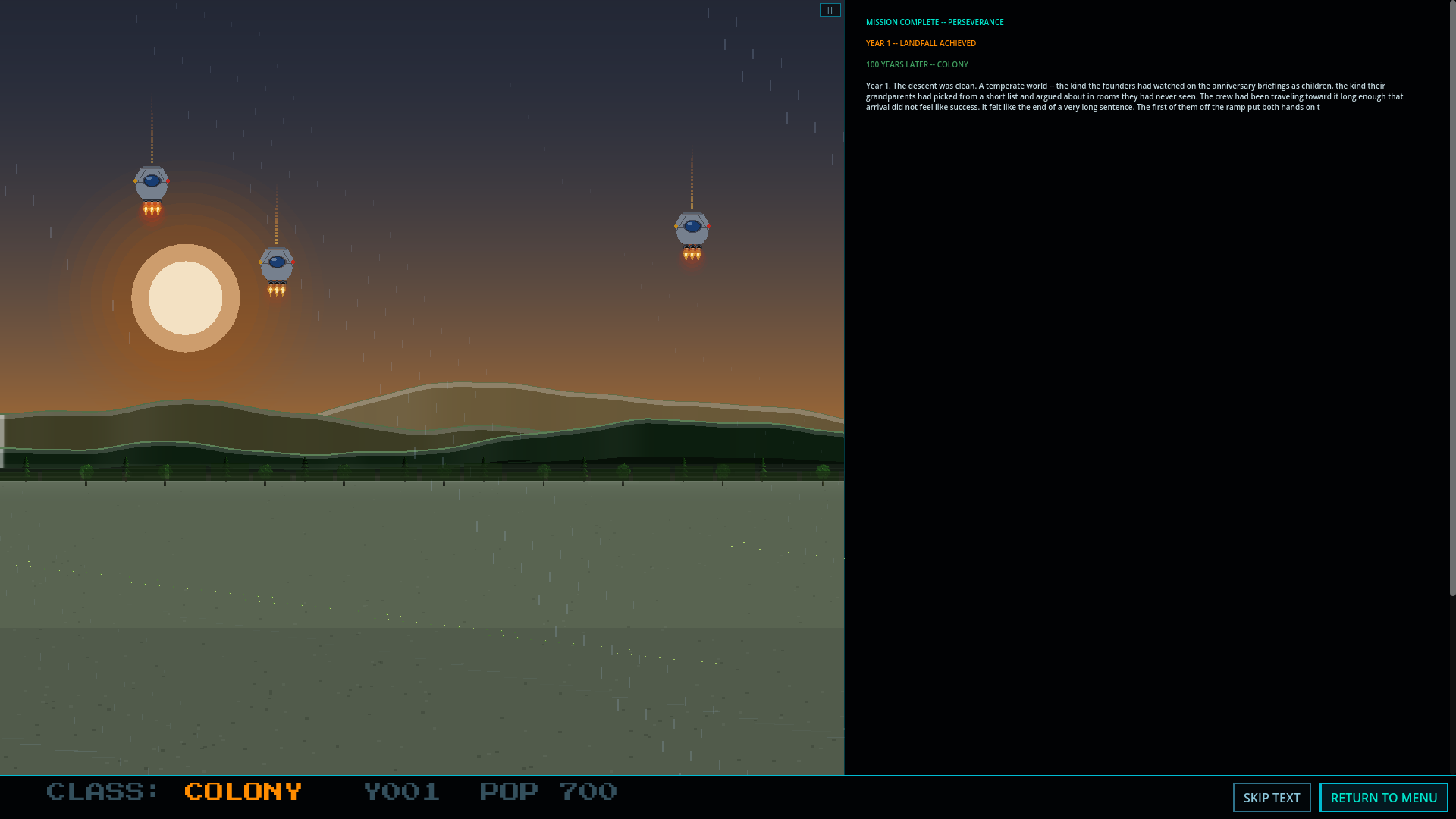
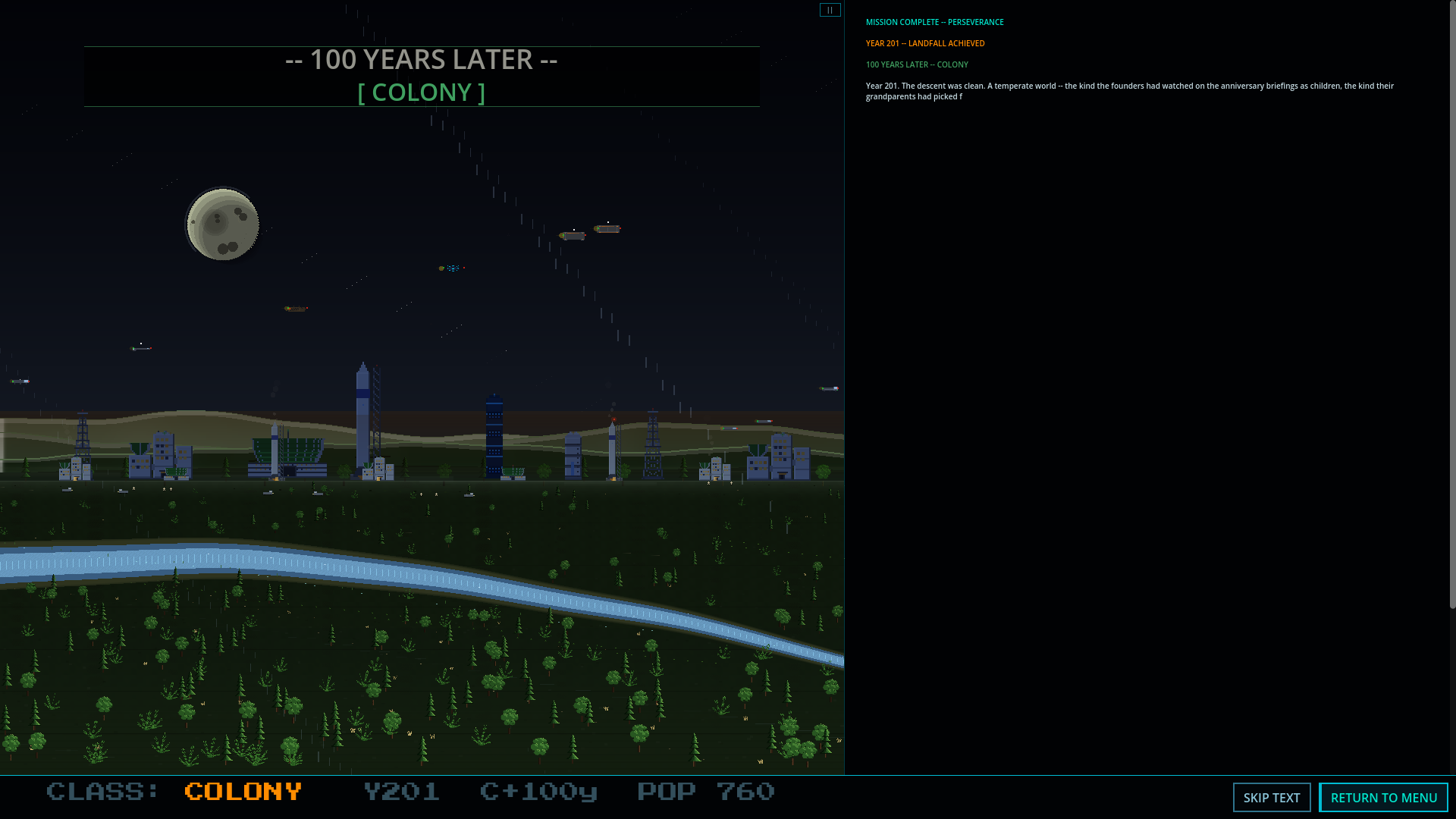
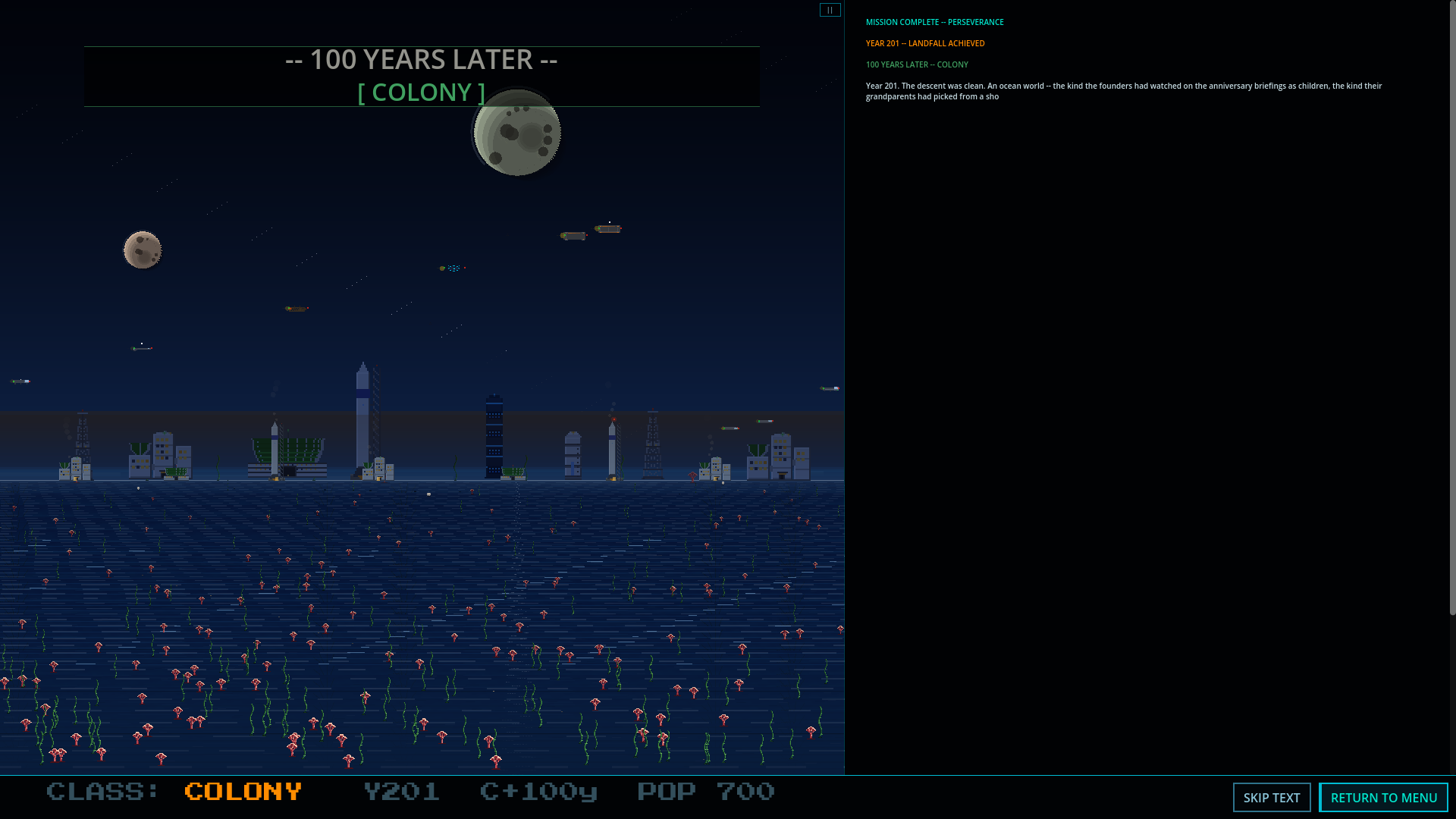
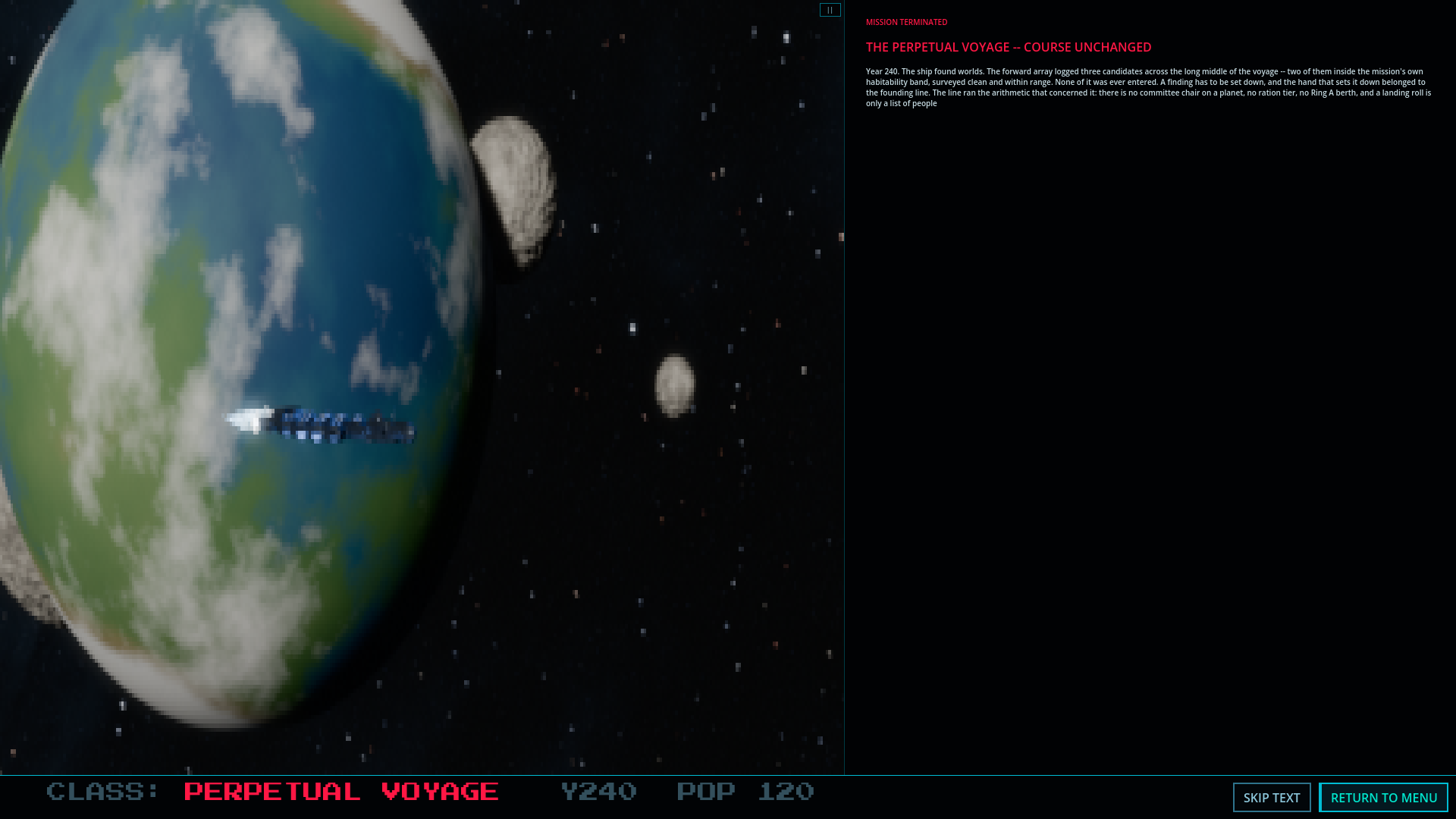
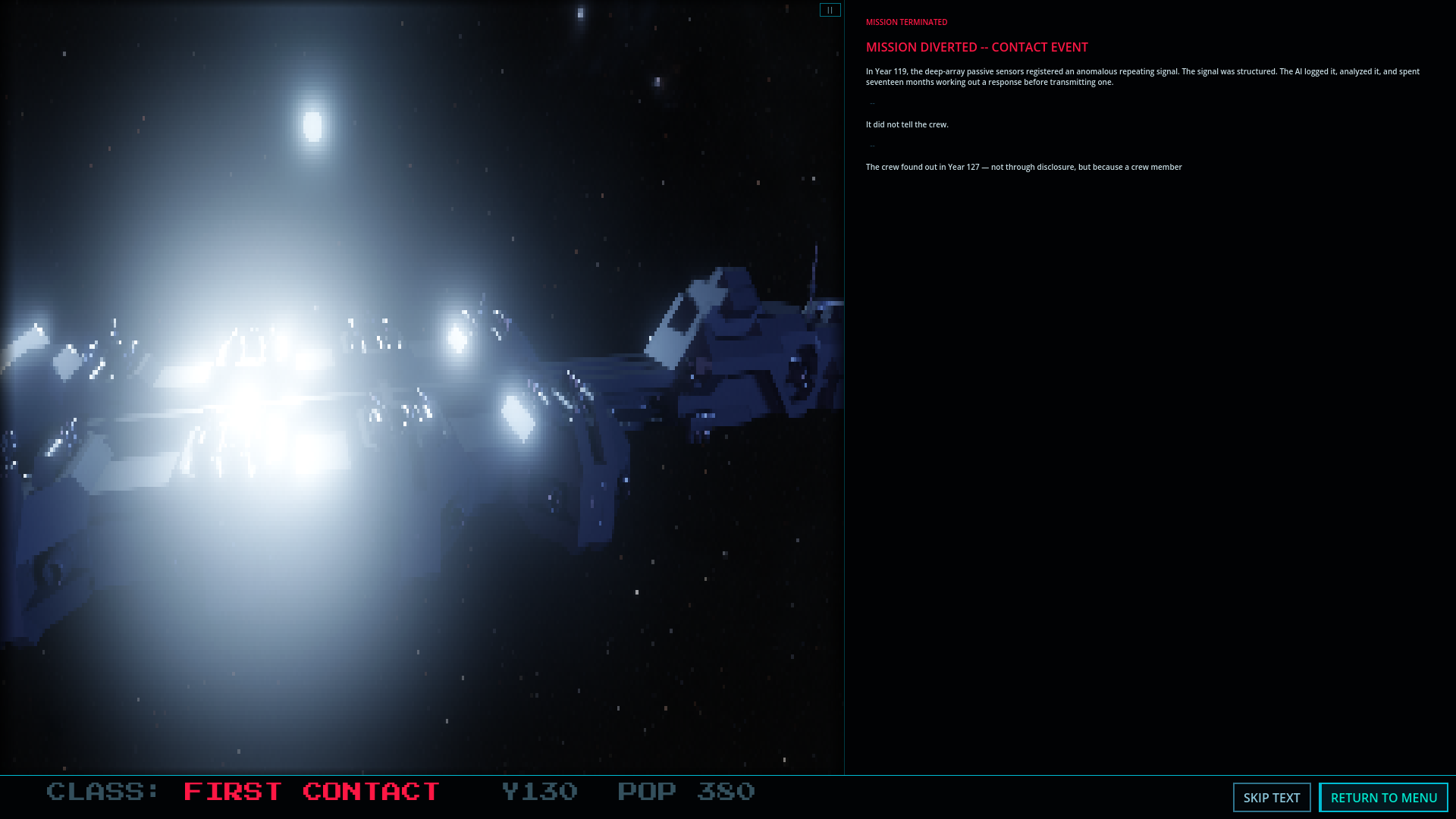
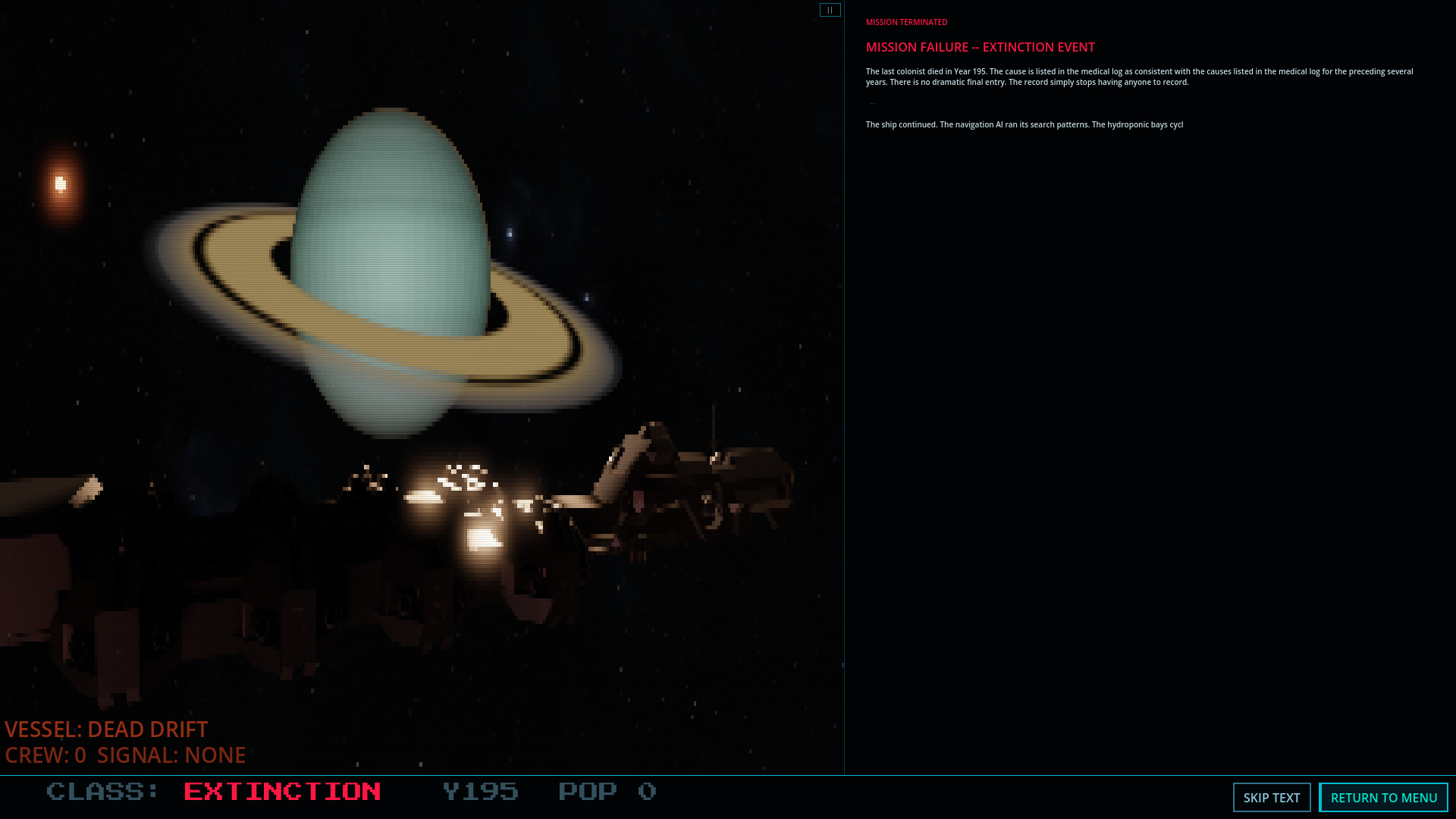
Reach a world and the game keeps going. The landing opens a living colony you can pan and zoom into — foot traffic, ground vehicles, industry venting downwind — or watch go dark as it fails. There are sixteen distinct endings, each read off the state of your run: a colony established, extinction, a ship that turns for home, a ship sealed into a voyage with no destination, a crew that uploads itself rather than land.
What arrives carries the mark of every choice along the way, including the ones no one alive remembers making.
FEATURES
Five kinds of drift
Genetic, ideological, reliance on the ship's AI, class division, and the slow loss of technical knowledge. Each accrues over the whole voyage. None of them reset.
Sixteen endings
Sixteen distinct terminals — settlement and extinction at the poles, and stranger outcomes in between. The ending is read off your run, not picked from a menu.
Five-faction governance
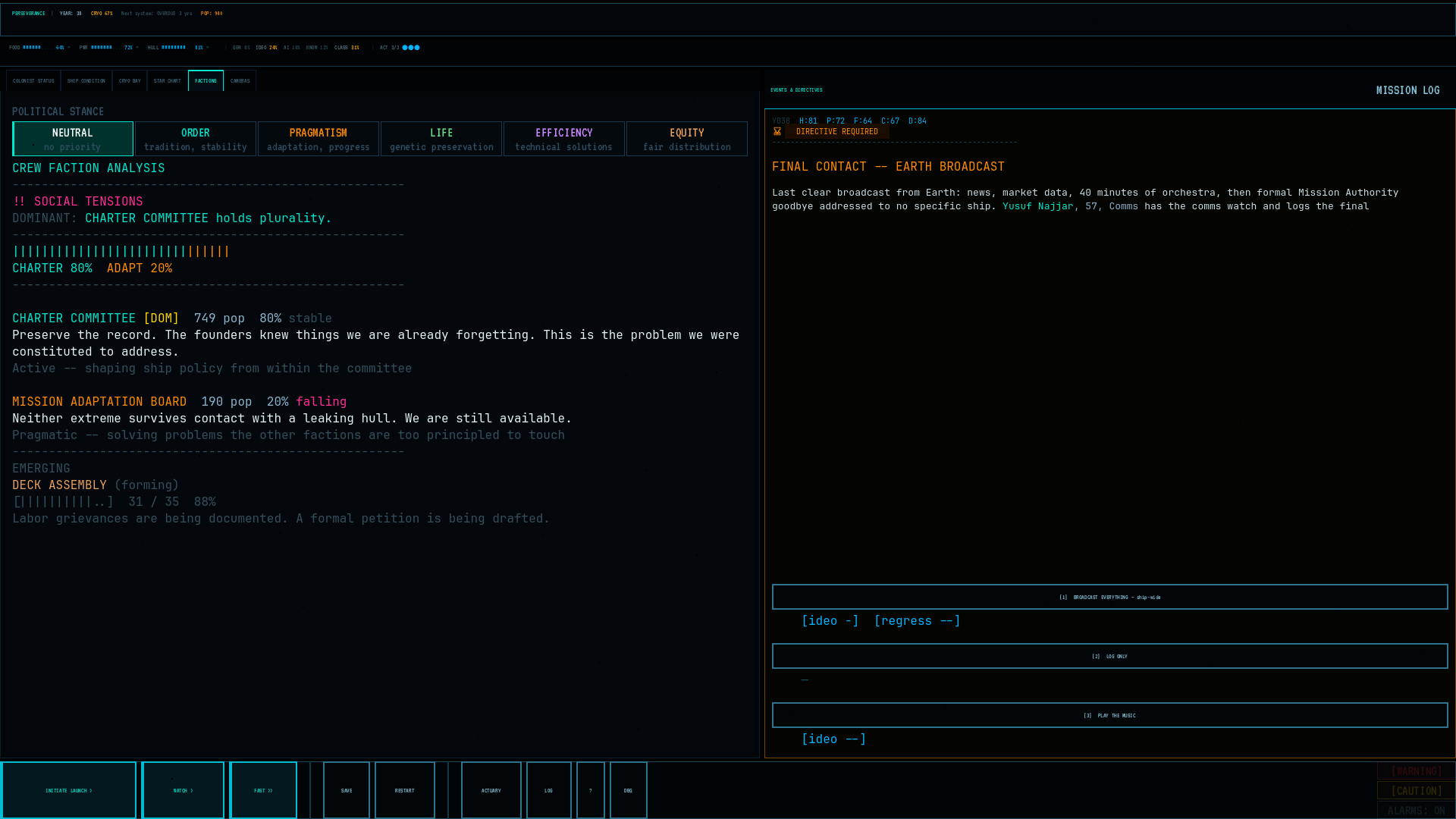
Five factions contend for the ship, gaining and losing ground across generations. Who governs at arrival is the long product of decisions their ancestors made and forgot.
Six interdependent subsystems
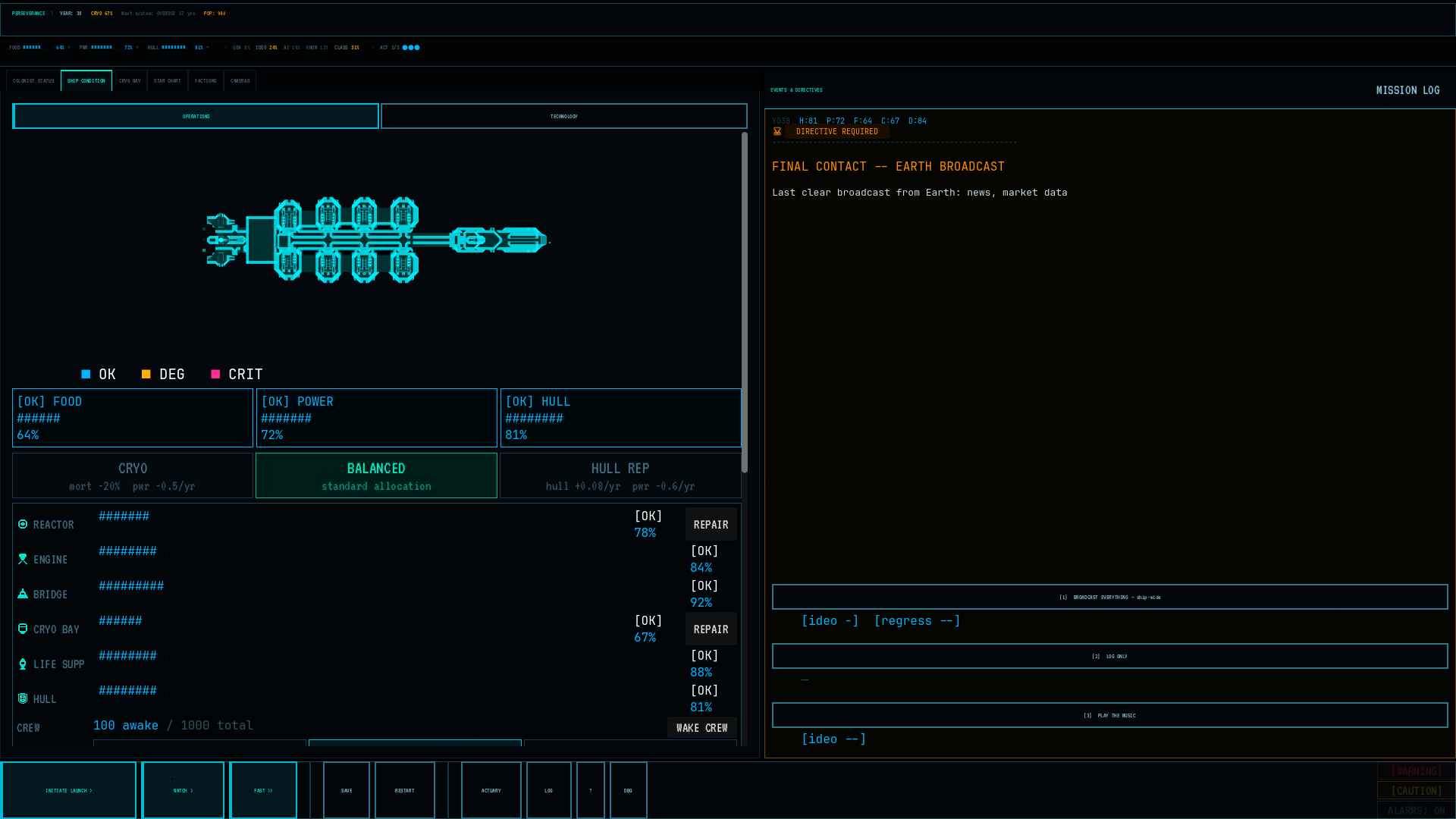
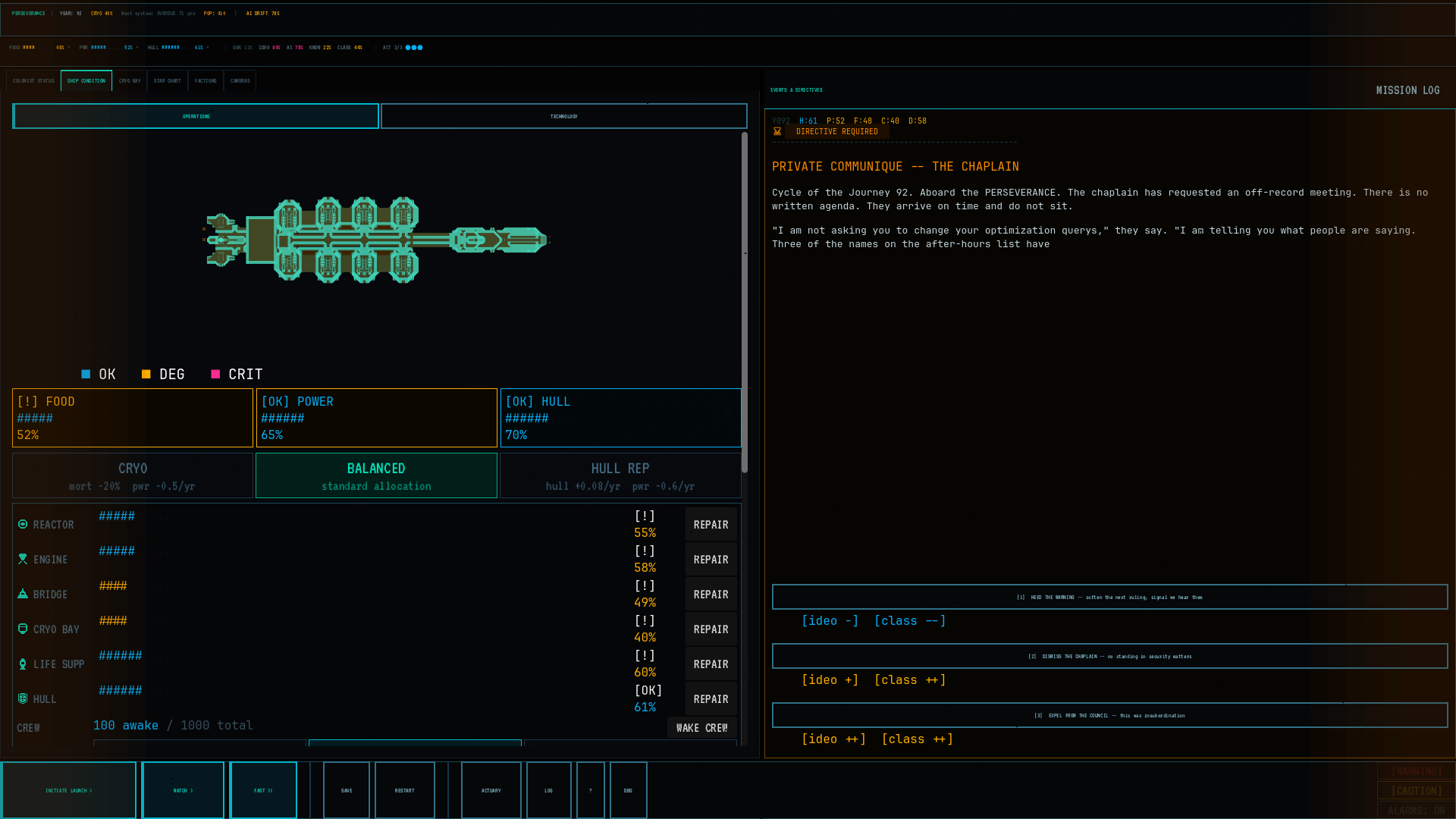
Reactor, engine, bridge, cryo, life support, hull. Failures cascade through the dependency graph. A cryo failure wakes the sleeping majority, and everything downstream changes.
Land, then keep going
Reaching a world opens a living settlement — habitats, foot traffic, ground vehicles, smoke on the wind — that thrives, struggles, or goes dark depending on the run.
A thousand people, not a sample
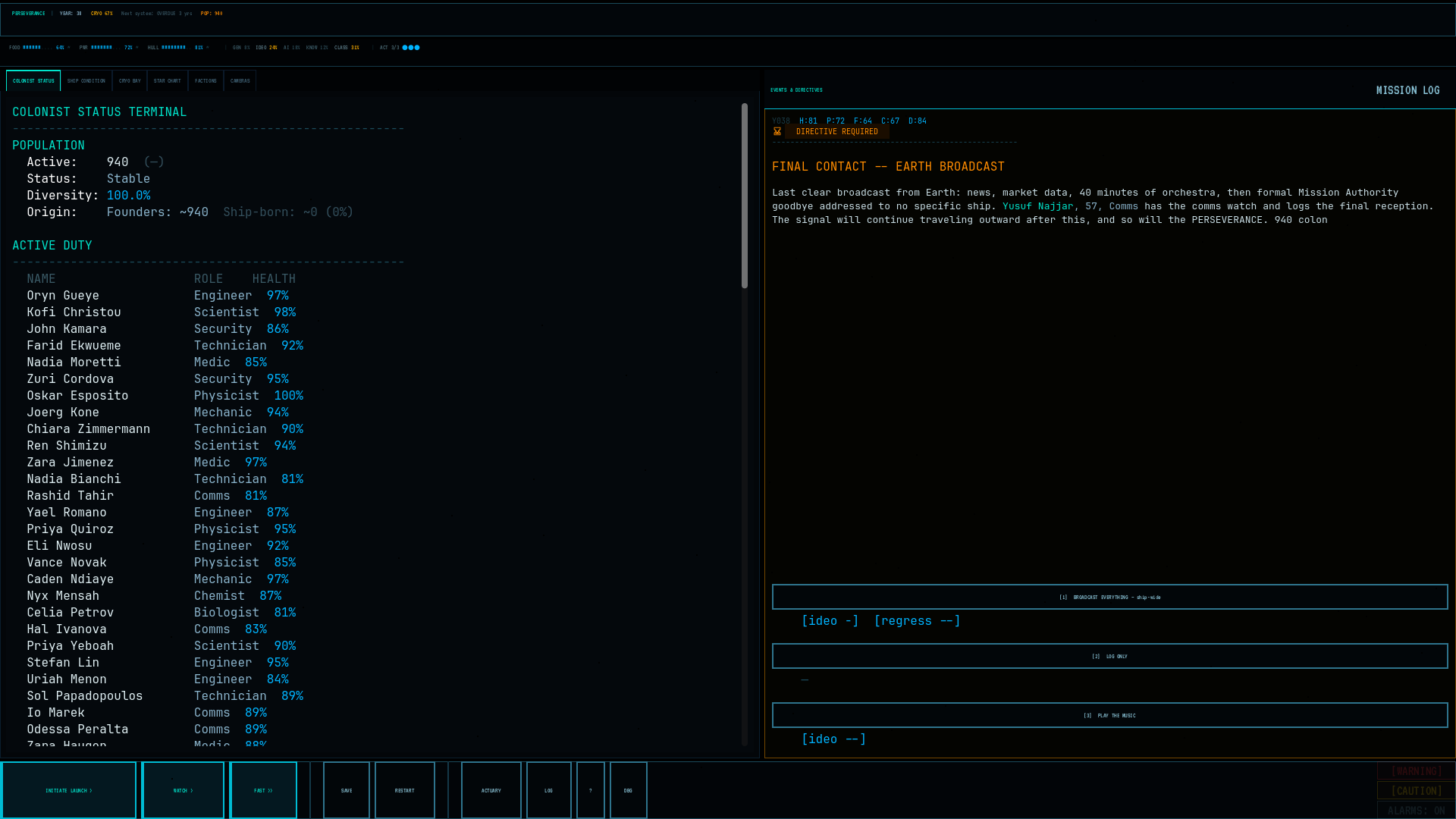
Every one of the 1,000 colonists is an individual — named, aged, given a role and a lineage. When the actuarial tables take someone, a specific named person is gone.
Centuries, not hours
The simulation runs on a generational clock. Colonists are born, age, and die in transit. Most of the people your decisions affect will be born and die without ever knowing one was made.
No combat, no clean win
Every choice has a defensible case and a cost. There's no optimal line and no victory screen; the open question is what the ship becomes.
Scripted + emergent events
Hundreds of hand-written beats — scripted events, chain events, drift-threshold events — plus the cascades that emerge from compounding system state.
CRT / terminal aesthetic
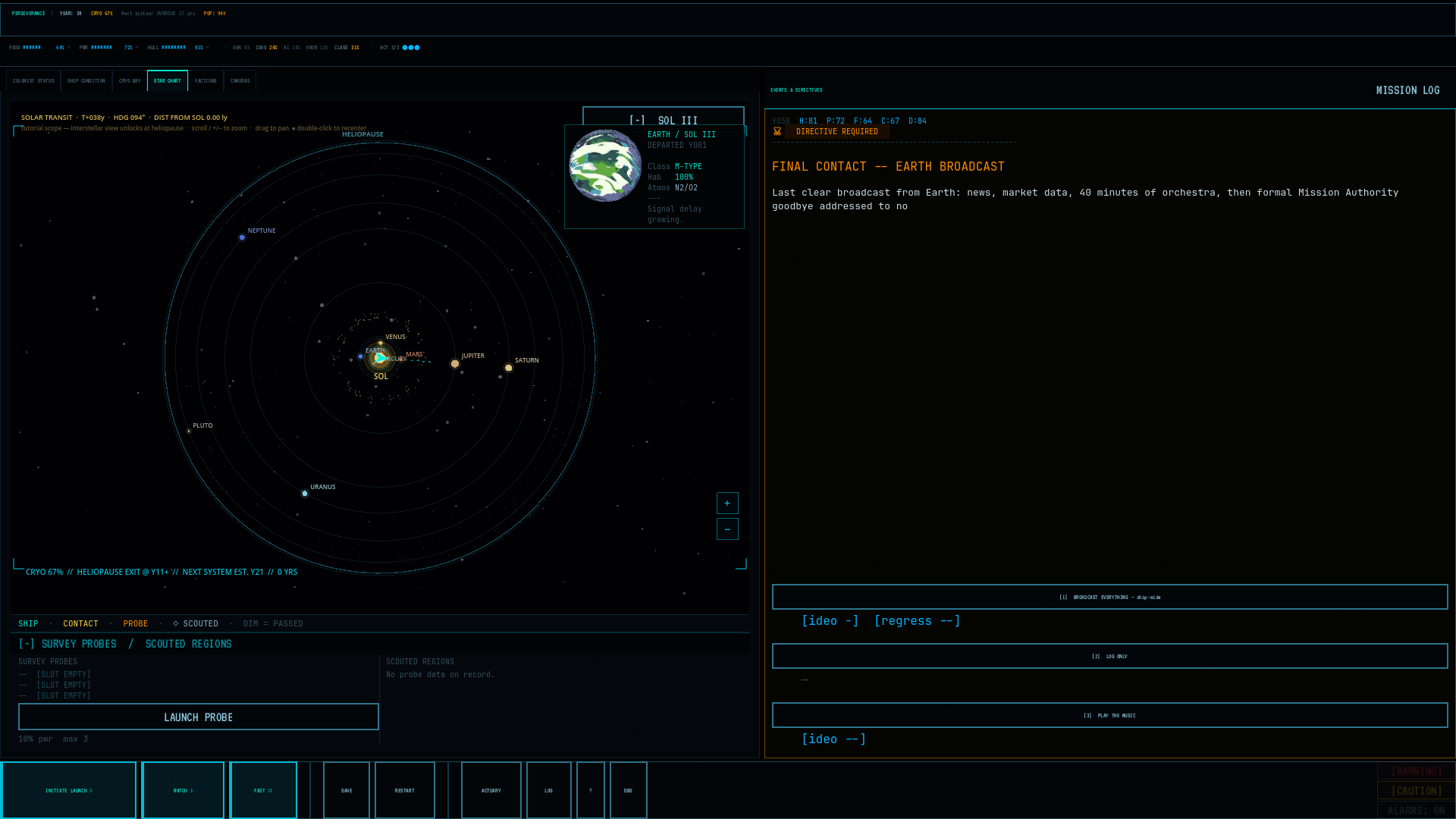
Phosphor green, teal accents, scanlines, pixel type — the mainframe-era idea of what a starship computer was supposed to look like.
Five languages
English, German, French, Italian, Spanish.
Deterministic simulation
Seeded runs reproduce exactly, which makes post-mortems and shared stories possible.
HISTORY
Dead Reckoning started from one premise: hand the player a civilization they will never meet, and hold them to it for centuries.
Most generation-ship fiction skips the middle: the crew sleeps, the AI keeps watch, and the story picks up at arrival. Dead Reckoning is set entirely in that middle — where ideology drifts, where the third generation no longer shares the first's assumptions, where a careful decision in year 40 becomes a crisis in year 180 that nobody alive remembers causing.
DEVELOPMENT
The project is built in Godot 4.6 by Garan Lorn. All UI is code-generated (no .tscn scenes for gameplay) to keep the project diffable and grep-able. The terminal aesthetic came early and stuck — PressStart2P for chrome, JetBrainsMono for body text, #00e5cc teal on #020608 deep space, CRT shader overlay on boot and intro sequences.
TIMELINE
- Early 2026 — First playable prototype. Core loop: events, decisions, colonists age, resources tick.
- Spring 2026 — Drift system. Five axes. Threshold events that rewrite the UI as corruption spreads.
- Spring 2026 — Endings overhaul. A set of distinct outcomes, each with its own illustration, epilogue, and generated narrative.
- Spring 2026 — Five-faction governance. Chain events. Route branching in the navigation system.
- Spring 2026 — Six-subsystem ship layer. Reactor, engine, bridge, cryo, life support, hull. Cascade graph. Hull-breach propagation.
- Spring 2026 — Localization to five languages. Steam store setup, Steam Deck compatibility pass, public demo.
- Mid 2026 — the 2.0 line — The back half of the game reworked. Landing opens into a living colony you can pan and zoom into; settlements are built up event by event instead of stamped; the 100-years-later ending reads the actual run.
- Mid 2026 — Every colonist named: all 1,000 carried as individuals from departure to the end of the run. New ending, the Perpetual Voyage. Full keyboard/controller support and a colorblind pass across every screen.
- June 25, 2026 — Full release on Steam and itch.io.
DESIGN PHILOSOPHY
The horror is retroactive. No decision should feel obviously wrong when you make it. The game's cruelty is in the compounding.
Never reset. The five drift axes accumulate across the entire voyage. There is no soft reset, no forgiveness mechanic, no way to undo what earlier generations did.
Text first. Every system is legible in prose. No combat animations, no particle celebrations, no spectacle to hide behind.
The writing carries it. The simulation's job is to produce situations the prose can make you feel. Without the writing, it's a spreadsheet.
QUOTES
Press coverage pending — the press kit is being assembled ahead of outreach. Playtester quotes are on file and will be added as permissions come in.
CAPSULE ART
 hero_1920x620.png
 header_920x430.png
 main_1232x706.png
 library_capsule_600x900.png
 itch_630x500.png
 vertical_748x896.png
 small_462x174.png
 library_logo_1280x720.png
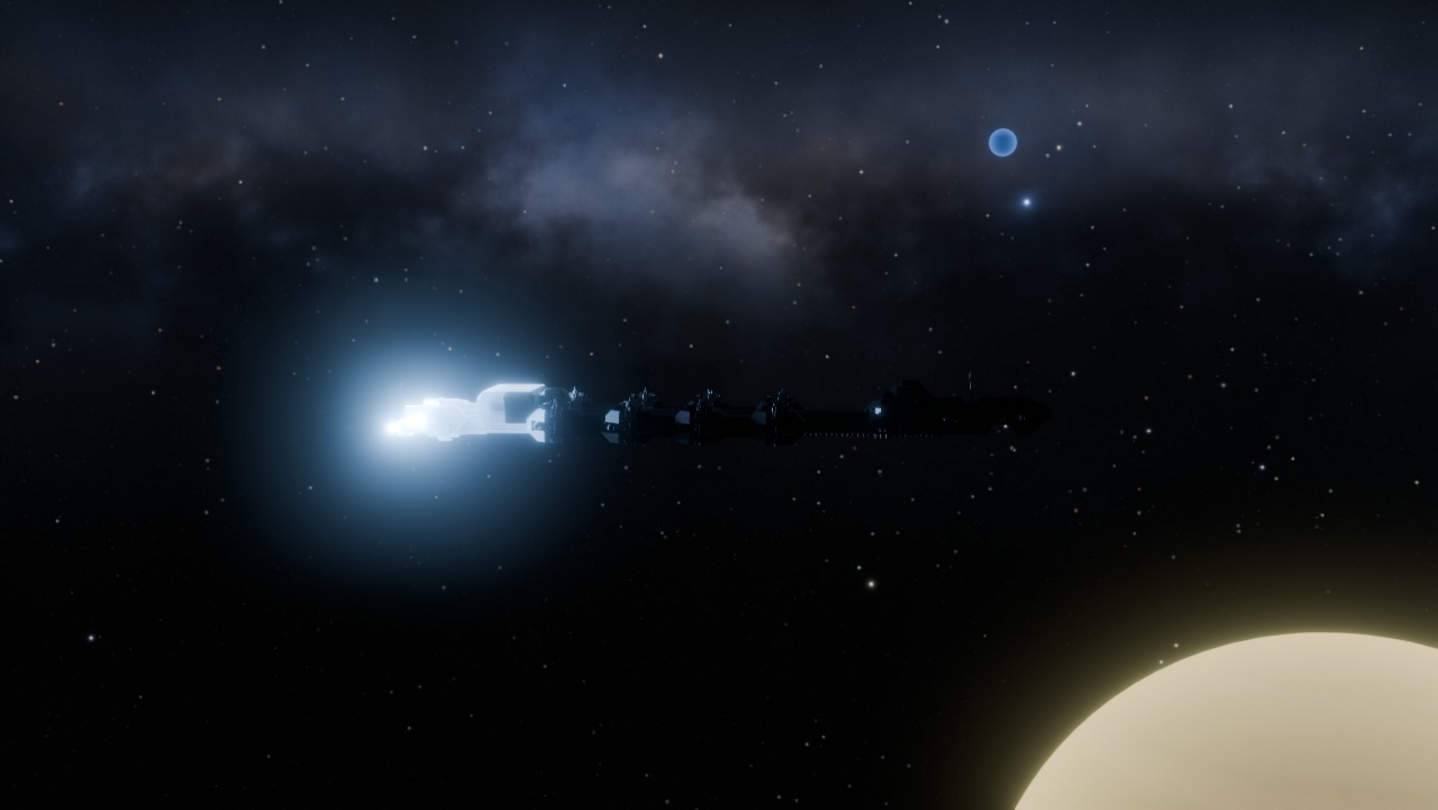 background_1438x810.png
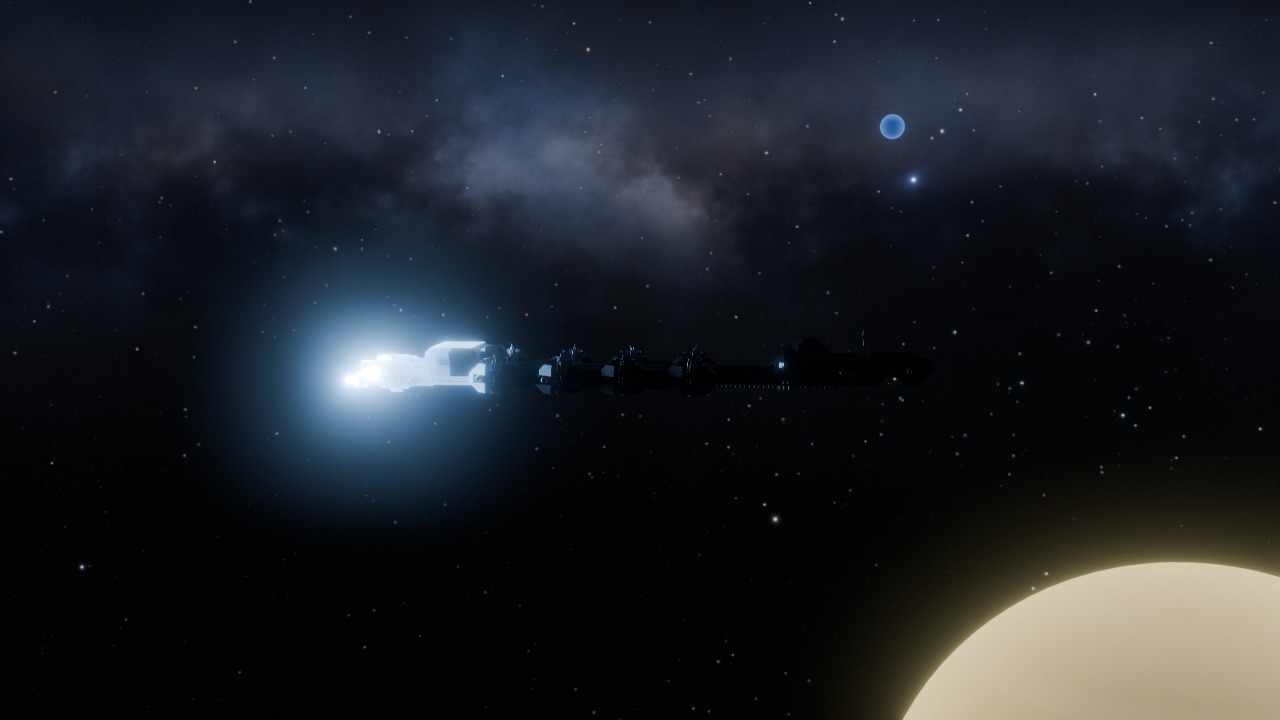 intro_f100.jpg
SCREENSHOTS
CREDITS
Garan Lorn — design, code, art direction, writing, audio.
Full third-party credits are shipped inside the game and on request.